
80 Discount on Petrol Price In Pakistan
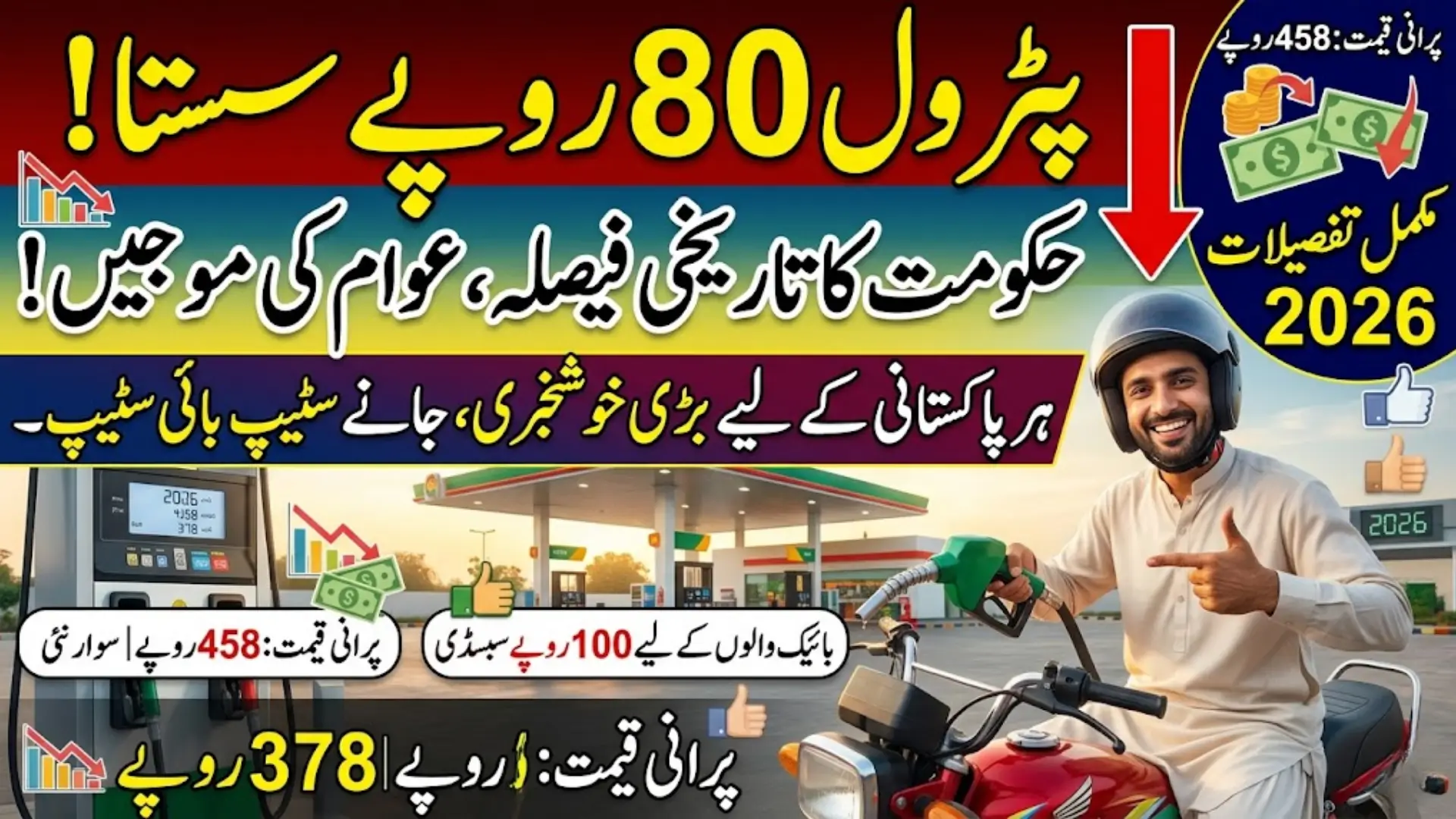
80 Discount on Petrol Price In Pakistan Pakistanis woke up to yet another major change in fuel prices, but this time the news brought some relief. After a record-breaking increase that shocked the entire nation, the government led by Shehbaz Sharif announced a reduction of Rs. 80 per litre in petrol prices. This sudden move came within 24 hours of the previous hike, showing how quickly the situation evolved.
For a country like Pakistan, where fuel prices directly impact daily expenses, this decision carries great importance. Petrol is not just used for vehicles; it affects transportation, food supply, and even small businesses. When prices rise sharply, the burden is felt in every household. That is why this reduction is being seen as a partial but important relief step.
At the same time, many citizens are still worried. Even after the reduction, petrol prices remain high compared to previous levels. This means that while the government has tried to ease pressure, the financial strain on the public has not completely disappeared.
You Can Also Read: Petrol Subsidy 100 Per Liter For Low Income Families
Timeline of Petrol Price Changes
The sequence of events over the past two days reflects how sensitive fuel pricing has become in Pakistan. On Thursday, the government announced a massive increase in petrol and diesel prices. Petrol jumped to over Rs. 458 per litre, while diesel crossed Rs. 520 per litre, setting new records.
This sudden increase created panic among the public. Transport fares were expected to rise, and businesses started preparing for higher costs. However, late Friday night, a new announcement changed the direction of the situation. The government decided to reduce petrol prices by Rs. 80 per litre, effective from midnight Saturday.
This quick reversal indicates that the authorities were under strong pressure to provide relief. It also shows how closely fuel prices are linked to public reaction and economic stability in the country.
Key developments in simple points:
- Record petrol price increase announced on Thursday
- Diesel prices also reached historic highs
- Public reaction and economic concerns increased rapidly
- Emergency review by government leadership
- Rs. 80 reduction announced late Friday night
- New prices from Saturday midnight
You Can Also Read: BISP Wallet Verification Guide Check JazzCash
Updated Petrol and Diesel Prices After Reduction
After the latest decision, petrol prices have been revised downward, giving some breathing space to consumers. However, diesel prices remain unchanged at a very high level, which continues to affect the overall economy.
| Fuel Type | Price Before (Rs.) | New Price (Rs.) | Difference |
|---|---|---|---|
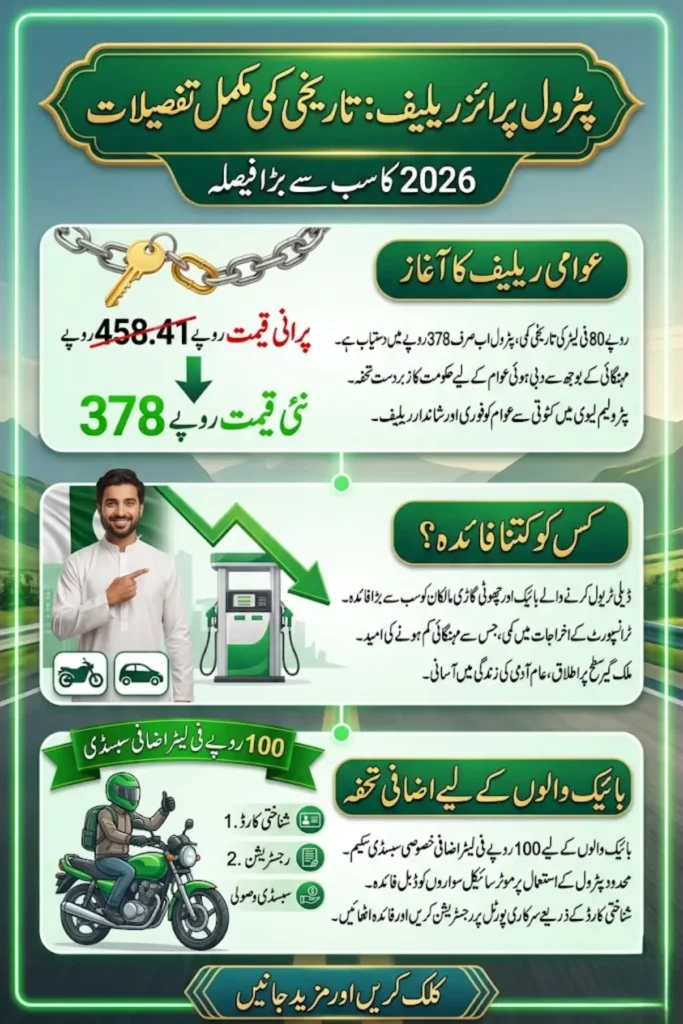
| Petrol | 458.41 | 378 | -80 |
| Diesel | 520.35 | 520.35 | No change |
This table clearly shows that while petrol users have received relief, diesel users have not. Since diesel is widely used in transport and agriculture, its high price means that the cost of goods and services may not decrease immediately.
For ordinary citizens, this creates a mixed situation. On one hand, daily commuters using petrol vehicles will benefit. On the other hand, inflation linked to transport and goods may continue.
Key Reasons Behind Sudden Price Increase
The major reason behind the sudden increase in fuel prices lies outside Pakistan. Global oil markets have been under pressure due to rising tensions involving major countries like the United States, Israel, and Iran. These tensions have disrupted oil supply chains, especially through the Strait of Hormuz, which is a key route for global oil transportation.
Pakistan imports a large portion of its fuel, making it highly dependent on international markets. When global oil prices rise, the local government has limited options and is often forced to increase domestic prices.
You Can Also Read: Solar Consumers New Electricity Charges
Important factors behind the increase:
- Rising geopolitical tensions affecting oil supply
- Disruption in major oil shipping routes
- Increase in global crude oil prices
- Weak local currency increasing import costs
- Heavy reliance on imported petroleum products
These reasons highlight that fuel pricing in Pakistan is not just a local issue but part of a larger global system.
Government Strategy to Reduce Public Pressure
After the sharp increase, the government faced strong public criticism. To manage the situation, it decided to reduce petrol prices by cutting the petroleum levy. This tax adjustment allowed the government to provide immediate relief without waiting for global prices to fall.
The prime minister explained that this reduction would remain in place for at least one month. The decision was made after consultations with both federal and provincial governments, indicating a coordinated effort to address the crisis.
Steps taken by the government:
- Temporary reduction in petroleum levy
- Nationwide implementation of new prices
- Coordination with provincial authorities
- Focus on short-term relief measures
- Monitoring of global oil market trends
While these steps have provided some relief, experts believe that long-term solutions will require structural changes in the energy sector.
You Can Also Read: Diesel Petrol Prices In April 2026 Increase
Breakdown of Subsidy Package for Citizens
Alongside the petrol price reduction, the government has continued its targeted subsidy program. This program is designed to help specific groups that are most affected by rising fuel costs.
Motorbike users, who represent a large portion of daily commuters in Pakistan, will receive a subsidy of Rs. 100 per litre on limited fuel usage. Farmers will also receive financial assistance to manage diesel costs during the harvesting season.
Key subsidy measures include:
- Rs. 100 per litre subsidy for motorbike users (limited monthly usage)
- Rs. 1,500 per acre support for small farmers
- Monthly financial assistance for transport operators
- Support for public buses to prevent fare increases
- Government backing for railway operations
These subsidies are aimed at reducing the direct impact of fuel prices on everyday life.
You Can Also Read: Honda 125 Price In Pakistan 2026 Full Specifications
Who Will Benefit the Most from This Relief
The relief measures are designed in a way that benefits the most vulnerable segments of society. Low-income households, especially those relying on motorbikes for daily travel, will see immediate savings.
Farmers will also benefit during a crucial time when fuel costs can significantly affect production expenses. Similarly, transport operators will receive financial support, which may help keep fares stable for passengers.
Groups benefiting the most:
- Daily wage earners and low-income families
- Motorbike users in urban and rural areas
- Farmers during harvesting season
- Transport sector including buses and trucks
However, it is important to note that middle-income households may still face challenges due to overall inflation.
Step-by-Step Guide to Avail Subsidy Benefits
To ensure transparency, the government has introduced a clear process for accessing subsidies. Citizens must follow proper steps to become eligible and receive financial assistance.
The process generally involves registration, verification, and approval through official channels. This ensures that only deserving individuals receive the benefits.
Steps to follow:
- Register through official government platforms
- Provide CNIC for identity verification
- Submit required details such as vehicle or land ownership
- Wait for verification and approval
- Receive subsidy through designated payment methods
This structured approach is intended to minimize misuse and ensure fair distribution.
You Can Also Read: New School Timings in Pakistan from April
Impact on Economy and Inflation
The reduction in petrol prices is expected to bring some short-term relief to the economy. Transportation costs for petrol-based vehicles may decrease, which can slightly reduce the prices of certain goods.
However, since diesel prices remain high, the overall impact on inflation may be limited. Goods transported over long distances will still carry higher costs, keeping pressure on the market.
In practical terms, this means that while some expenses may decrease, the overall cost of living is likely to remain high in the near future.
Government Cost-Cutting Measures
In addition to public relief measures, the government has also taken steps to reduce its own spending. One significant decision is the extension of cabinet salary reductions from two months to six months.
This move is intended to redirect financial resources toward public welfare programs. It also sends a message that the government is willing to share the burden during difficult economic times.
Such steps, if continued, can help build public trust and improve financial management.
Future Outlook of Petrol Prices in Pakistan
Looking ahead, the future of petrol prices in Pakistan remains uncertain. Much depends on global oil market trends and geopolitical developments. If international tensions ease, there may be further reductions in fuel prices.
However, if the situation worsens, prices could rise again. The government will likely continue adjusting taxes and subsidies to manage the situation.
For citizens, it is important to stay prepared for fluctuations. Fuel prices in Pakistan are expected to remain sensitive to global events, and stability may take time to achieve.
Conclusion
The Rs. 80 reduction in petrol prices has provided some relief to the people of Pakistan, but it is not a complete solution. While the government has taken important steps, challenges remain due to high diesel prices and global uncertainties.
This situation highlights the need for long-term planning and energy independence. Until then, citizens will continue to experience ups and downs in fuel prices, with each change directly affecting their daily lives.