
Solar Consumers New Electricity Charges
Solar Consumers New Electricity Charges In recent years, solar energy has become one of the most discussed topics in Pakistan’s energy sector. From major cities to small towns, rooftops covered with solar panels are now a common sight. The main reason behind this rapid shift was simple: electricity bills kept increasing, and solar offered a way out. Net metering made this transition even more attractive by allowing consumers to sell excess electricity back to the grid and reduce their monthly bills.
However, the situation is no longer as straightforward as it once was. New discussions around electricity charges, proposed reductions in buyback rates, and upcoming regulatory changes have created uncertainty among solar users. Many people who were planning to install solar systems are now confused. The real question today is not whether solar works, but whether it still delivers the same financial benefits under the new net metering rules in Pakistan.
You Can Also Read: Diesel Petrol Prices In April 2026 Increase And Decrease
Pakistan’s Solar Boom: From Alternative to Mainstream Energy
Solar energy in Pakistan has experienced explosive growth over the past decade. What started as a niche solution for a few households has now become a mainstream energy option. This rapid adoption is largely due to rising electricity tariffs and frequent power issues, which forced consumers to look for reliable alternatives.
Between 2016 and 2025, net-metered solar capacity increased from around 50 MW to over 6 GW. This is not just growth; it is a complete transformation of how electricity is produced and consumed in the country. Industrial users have taken the lead because they consume large amounts of electricity and can recover their investment faster. Residential users, although increasing, still form a smaller share.
Key highlights of solar growth in Pakistan include:
- Net-metered capacity crossing 6 GW in 2025
- More than 283,000 registered solar consumers
- Industrial sector contributing around 67% of installations
- Residential users contributing nearly 14%
- Continuous imports of solar panels indicating future growth
You Can Also Read: Honda 125 Price In Pakistan 2026 Full Specifications
How Net Metering Works and Why It Became Popular
Net metering is the system that made solar financially attractive for most Pakistanis. It allows consumers to generate electricity using solar panels, use it for their own needs, and export the extra units to the grid. In return, they receive credits that reduce their electricity bills.
This system effectively changed the role of consumers. Instead of being dependent entirely on electricity distribution companies, people became partial producers of electricity. This shift not only reduced bills but also gave a sense of control over energy consumption.
The working process of net metering can be understood simply:
- Solar panels generate electricity during sunlight hours
- Electricity is used instantly within the home or business
- Excess electricity is exported to the national grid
- Exported units are adjusted as credits in the monthly bill
Net Metering vs Net Billing: The Shift That Changes Everything
One of the most important changes being discussed in Pakistan’s solar policy is the possible shift from net metering to net billing. While both systems allow users to export electricity, the difference lies in how that electricity is valued.
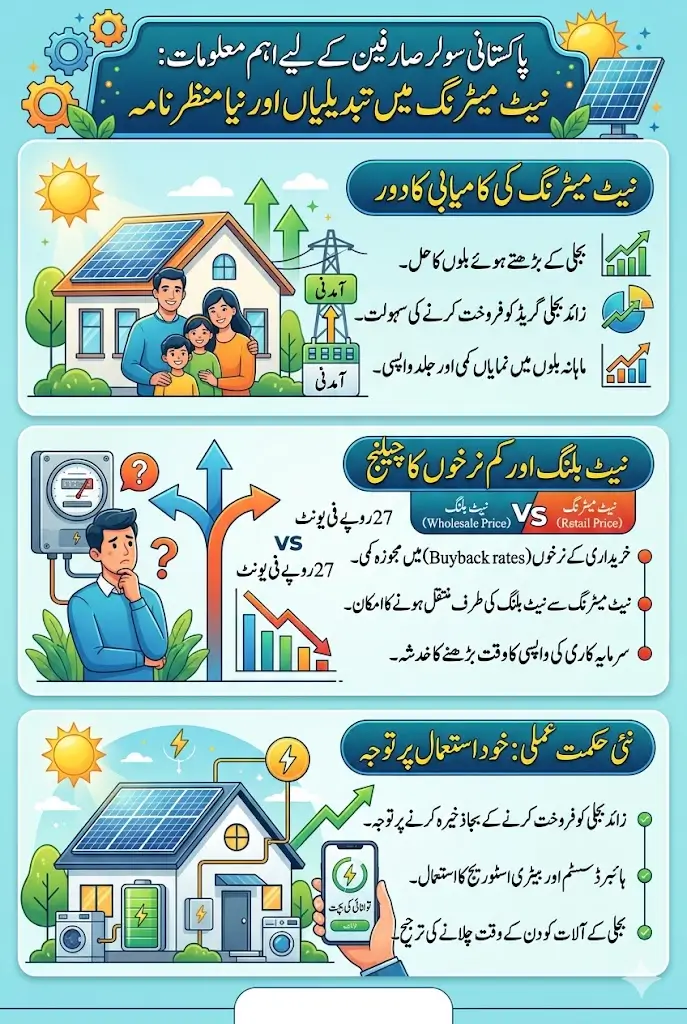
Under net metering, exported electricity is credited at a rate close to what consumers pay for electricity. This makes solar highly profitable. In contrast, net billing compensates exported electricity at a lower rate, similar to wholesale pricing. This significantly reduces the financial benefit of solar systems.
| Feature | Net Metering | Net Billing |
|---|---|---|
| Export Compensation | Close to retail tariff | Lower wholesale tariff |
| Monthly Savings | Higher | Reduced |
| Payback Period | Shorter (3–5 years) | Longer |
| Investment Attractiveness | Strong | Moderate |
This shift is critical because it directly affects how quickly a solar system can recover its cost. For new users, this could change the entire decision-making process.
You Can Also Read: New School Timings in Pakistan from April 1
Rising Electricity Prices and Falling Solar Costs: The Real Drivers
The growth of solar energy in Pakistan is driven by a clear economic reality. Electricity tariffs have increased significantly over the years, while solar technology has become more affordable globally. This combination created a perfect environment for solar adoption.
Back in 2015, electricity cost around PKR 9 per unit. By 2024, it had reached approximately PKR 44 per unit. This sharp increase forced both households and businesses to explore alternatives. At the same time, global solar panel prices dropped by more than 40%, making installation more affordable.
The key drivers behind solar adoption include:
- Continuous increase in electricity tariffs
- Decreasing cost of solar panels and equipment
- Frequent load shedding and unreliable supply
- Desire for long-term financial stability
- Growing awareness about renewable energy
Financial Reality: Is Solar Still a Profitable Investment in 2026?
Despite policy uncertainty, solar energy remains a financially viable option in Pakistan. Most systems still recover their cost within three to five years, depending on usage patterns and system size. After the payback period, the savings continue for many years, making it a long-term investment.
However, the financial model is changing. Previously, users could rely on exporting excess electricity to maximize savings. Now, the focus is shifting toward self-consumption. This means that users need to design their systems according to their actual energy needs rather than overproducing electricity.
Factors that influence solar profitability today:
- Household or business electricity consumption
- System size and installation cost
- Buyback rates for exported electricity
- Future policy changes and regulations
You Can Also Read: Fuel Quota App To Distribute Petrol Diesel Equal
Buyback Rate Reduction: Why It Is Creating Uncertainty
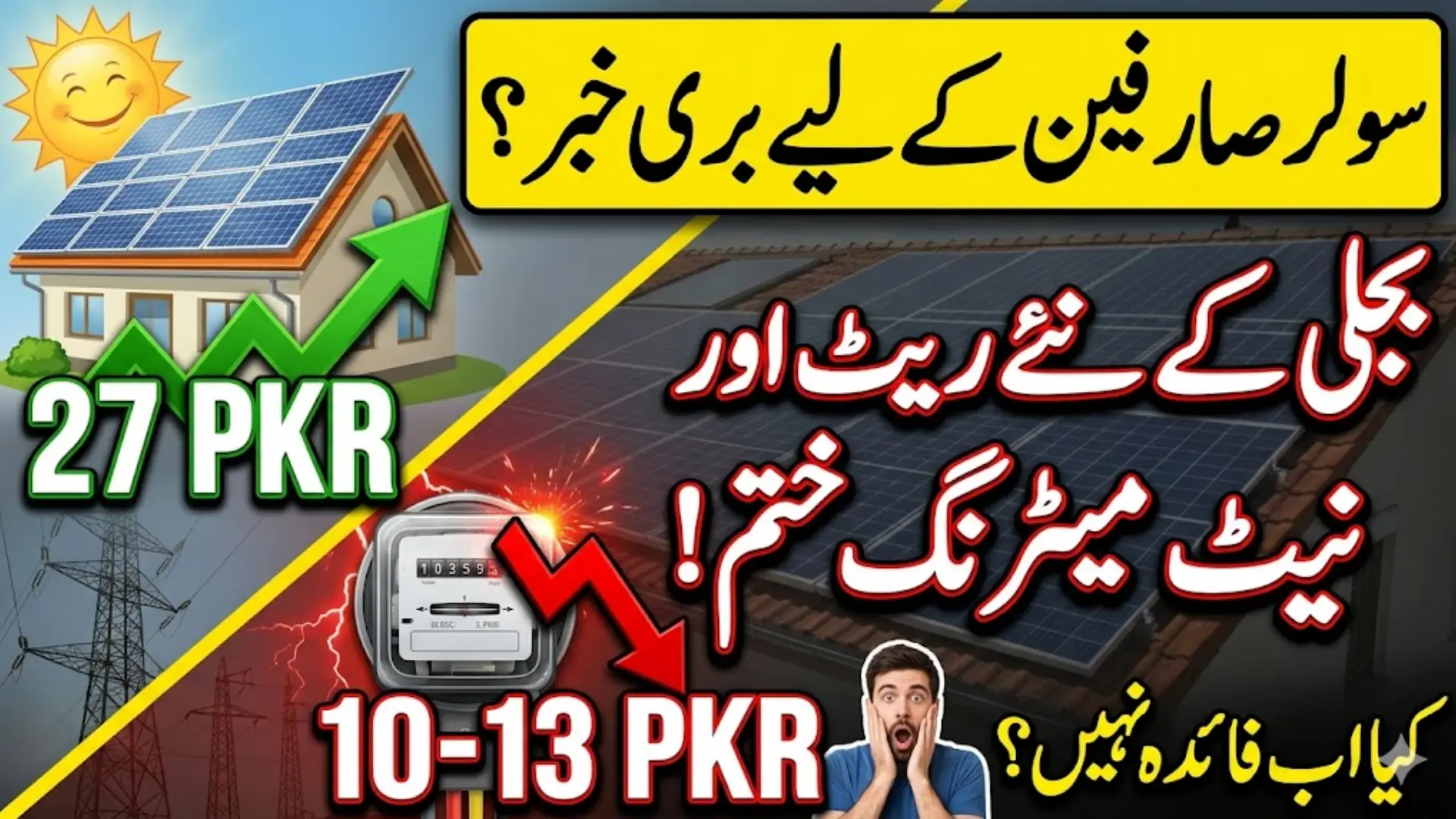
The proposed reduction in buyback rates is one of the most controversial aspects of the new solar policy. Currently, solar users receive around PKR 27 per unit for exported electricity. The proposed change would reduce this rate to between PKR 10 and PKR 13 per unit.
This reduction may seem small, but it has a major impact on overall savings. Lower buyback rates mean that exporting electricity becomes less profitable, and the payback period for new installations may increase.
Key concerns regarding buyback rate changes:
- Reduced financial returns for new solar users
- Longer time required to recover investment
- Decreased attractiveness of large solar systems
- Increased focus on self-consumption instead of export
Government Concerns: The Burden on the Power System
While solar users benefit from net metering, the government faces a different challenge. As more people generate their own electricity, they purchase fewer units from the grid. However, the cost of maintaining the grid remains the same.
This creates a financial imbalance. Non-solar consumers end up bearing a larger share of the cost. Reports suggest that net metering has shifted approximately PKR 159 billion in costs onto non-solar users. This is one of the main reasons behind the proposed policy changes.
You Can Also Read: Honda 125 Price In Pakistan 2026 Specifications
New Solar Policies 2025: What Is Expected to Change
The upcoming Prosumer Regulations 2025 aim to update the existing framework introduced in 2015. At that time, solar adoption was limited, and policies were designed to encourage growth. Today, the focus has shifted toward managing that growth.
The new regulations are expected to introduce several important changes:
- Reduction of licensing period from 7 years to 5 years
- Removal of the 1.5x sanctioned load allowance
- Greater control over system size and energy export
- Possible transition toward net billing
These changes are intended to balance the needs of solar users and the stability of the national grid.
You Can Also Read: 11th & 12th Class Date Sheet 2026 All Punjab Boards
Changing Strategy: From Selling Electricity to Saving Electricity
The solar market in Pakistan is undergoing a strategic shift. Earlier, the main goal was to generate excess electricity and sell it back to the grid. Now, the focus is on maximizing self-consumption.
Hybrid systems that combine solar panels with battery storage are becoming increasingly popular. These systems allow users to store excess electricity and use it later, reducing dependence on the grid.
Emerging trends in solar usage:
- Increased adoption of battery storage systems
- Focus on using electricity during daylight hours
- Reduced reliance on grid exports
- Smart energy management solutions
Should You Still Install Solar in Pakistan?
For most people, the answer is still yes. Solar energy continues to offer protection against rising electricity prices and provides long-term savings. However, the approach needs to be more practical and informed.
Instead of relying on high buyback rates, users should focus on optimizing their energy usage. A well-planned system that matches consumption needs can still deliver strong financial returns.
Before making a decision, consider:
- Your monthly electricity consumption
- Budget and system size
- Future electricity price trends
- Expected policy changes
Conclusion
Solar energy in Pakistan has reached a stage where growth is being followed by regulation. The early phase of high incentives is gradually being replaced by a more balanced system. While this may reduce some financial benefits, it does not eliminate the value of solar energy.
For consumers, the opportunity still exists, but it requires smarter planning and realistic expectations. Solar is no longer just about reducing bills; it is about gaining control over energy in an environment where electricity costs continue to rise.