
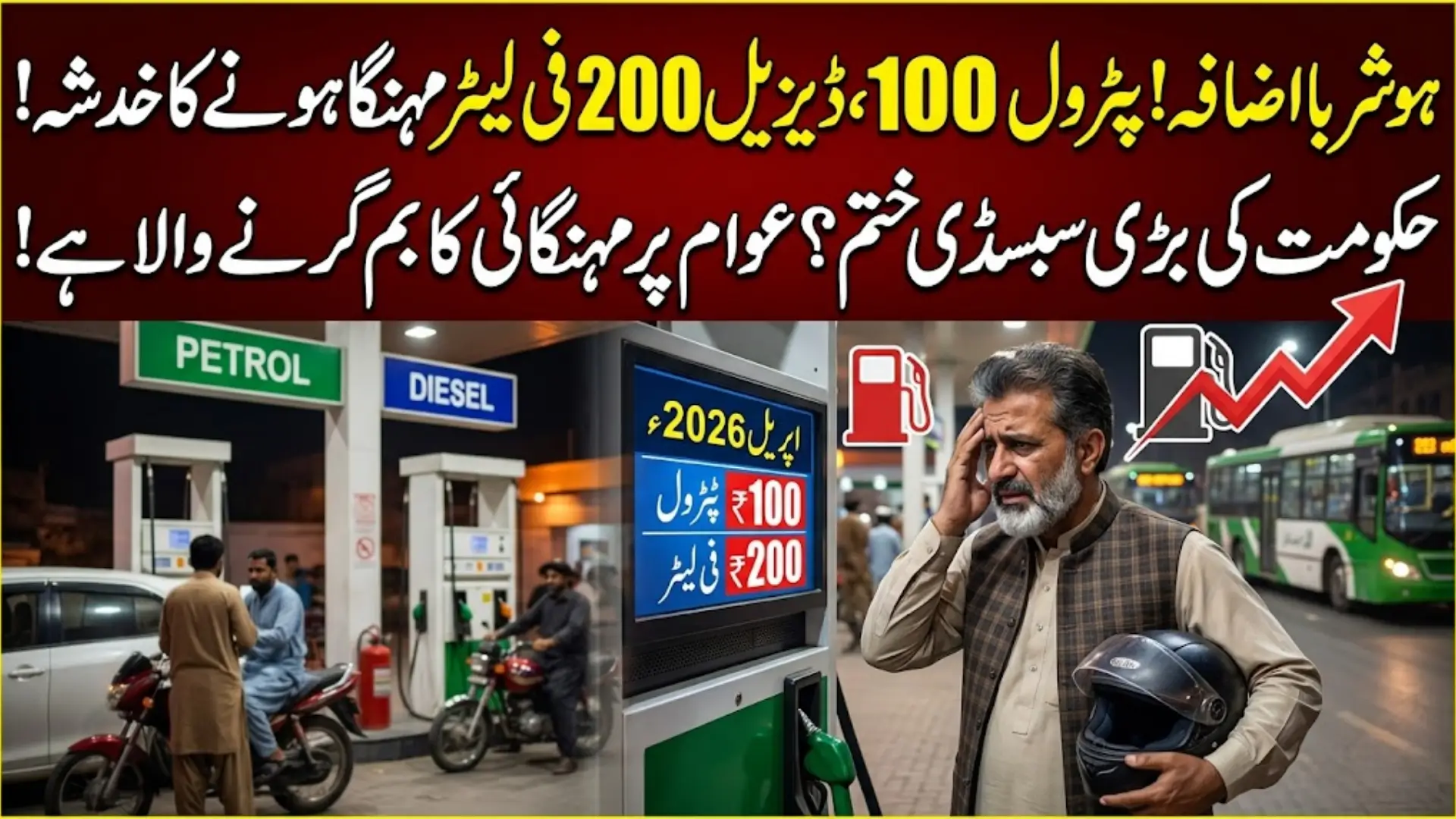
Diesel Petrol Prices
Diesel Petrol Prices Pakistan is once again entering a critical phase regarding petrol and diesel prices in April 2026. Over the past few weeks, the federal government has tried to shield the public from sudden price shocks by providing heavy subsidies. This temporary relief helped keep prices stable, but it also placed a significant burden on the national exchequer. Now, as global oil prices start rising again, the government is finding it increasingly difficult to maintain the same level of support.
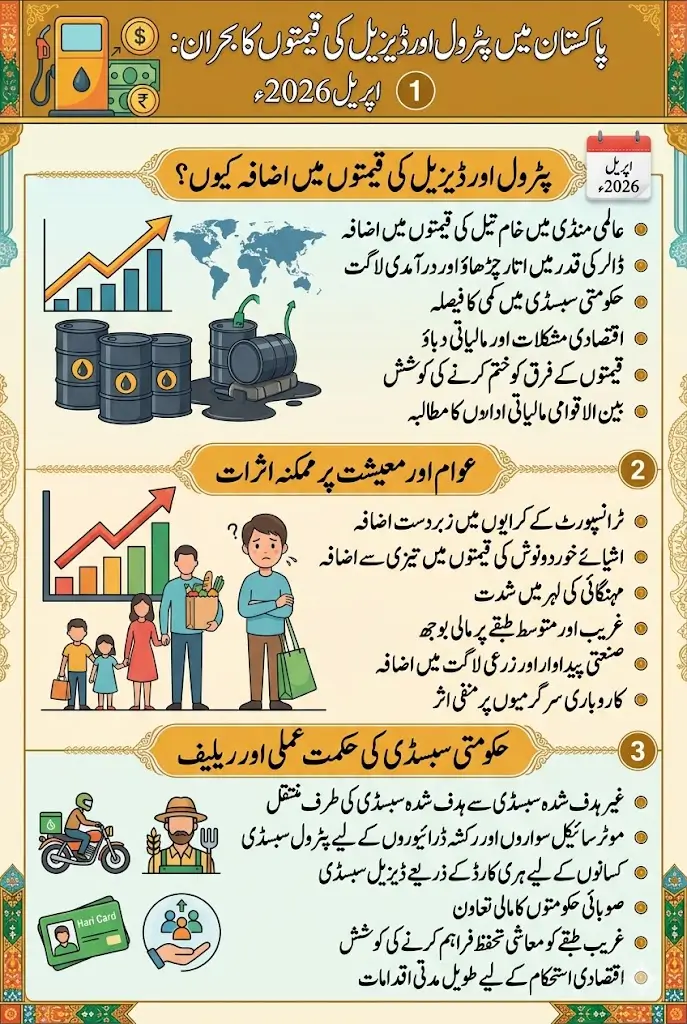
From discussions held at the highest level, including meetings between federal and provincial leadership, it has become clear that the current pricing model cannot continue. Officials have indicated that the gap between actual fuel cost and the price being charged from consumers has widened dangerously. As a result, the government is preparing to revise petroleum prices within days, shifting part of the burden back to the public while trying to protect vulnerable segments.
You Can Also Read: Honda 125 Price In Pakistan 2026 Full Specifications
- Government maintained prices through subsidies in recent weeks
- Large financial burden created due to controlled pricing
- Price revision expected soon after official calculations
- Gap between real cost and selling price has widened significantly
Why Petrol and Diesel Prices Are Expected to Increase
The expected increase in petrol and diesel prices is directly linked to global oil market trends. Pakistan relies heavily on imported petroleum products, which means any increase in international crude oil prices immediately affects local pricing. Over the last few days, global markets have shown volatility, with prices rising sharply after a brief period of stability.
Another major issue is the accumulated price gap. According to internal estimates, petrol is currently underpriced by around Rs100 per litre, while diesel is underpriced by more than Rs200 per litre. This difference is being covered through subsidies, which is not sustainable in the long run. Economic managers are now under pressure to reduce this gap and move towards a more realistic pricing structure.
- Increase in international crude oil prices
- Higher import and landed cost of fuel
- Large subsidy-driven price gap
- Pressure on government finances
You Can Also Read: New School Timings in Pakistan from April
Estimated Price Hike in April 2026
The upcoming price adjustment is expected to be one of the most significant in recent months. Officials are considering passing the full impact of petrol prices to consumers, while diesel may see a partial increase initially due to its direct link with inflation and transport costs. However, these decisions are still under review and will be finalized based on updated calculations from OGRA and the Petroleum Division.
There is also a possibility that the government may adopt a balanced approach, where part of the increase is absorbed through subsidies and the rest is passed on to the public. This approach is being considered to avoid sudden economic shock, especially for low-income households and small businesses.
Estimated Price Gap and Possible Adjustment
| Fuel Type | Estimated Price Gap | Expected Government Action |
|---|---|---|
| Petrol | Around Rs100/litre | Likely full pass-on to consumers |
| Diesel | Over Rs200/litre | Partial increase to control inflation |
- Petrol prices likely to increase sharply
- Diesel increase may be gradual
- Final announcement expected within days
- Decision depends on latest global oil prices
You Can Also Read: Fuel Quota App To Distribute Petrol Diesel Equal
Government Subsidy Strategy Explained
In the past three weeks alone, the government has spent approximately Rs129 billion on fuel subsidies. There is also a financial ceiling of Rs158 billion, beyond which further spending would become extremely difficult. This shows that the current subsidy model is not sustainable and needs immediate restructuring.
The government is now shifting towards a targeted subsidy mechanism. Instead of providing relief to all consumers equally, the new plan focuses on supporting only those segments that are most vulnerable or directly dependent on fuel for their livelihood. This approach is being seen as more efficient and economically viable in the long term.
- Rs129 billion already spent on subsidies
- Maximum subsidy limit close to being reached
- Shift from universal to targeted subsidy system
- Focus on financial sustainability
Targeted Relief for Bikers and Farmers
One of the key elements of the new strategy is to provide direct relief to bikers, rickshaw drivers, and farmers. These groups are considered most vulnerable to fuel price increases because their daily income depends on fuel usage. The government is planning to introduce a rationing system where bikers and three-wheeler drivers will receive petrol at subsidized rates.
For farmers, diesel subsidy will be provided through structured systems such as the Hari Card in Sindh. Punjab and KP are also planning to introduce similar mechanisms. This targeted approach aims to ensure that relief reaches those who need it the most, without putting excessive pressure on national finances.
- Petrol subsidy for bikers and rickshaw drivers
- Diesel subsidy for farmers through digital systems
- Provinces to implement and manage subsidy distribution
- Uniform policy expected across Pakistan
You Can Also Read: Honda 125 Price In Pakistan 2026 Specifications
Role of Provinces in Fuel Price Management
A major development in this situation is the involvement of provincial governments in sharing the subsidy burden. Previously, the federal government was handling the entire responsibility, but now provinces have been asked to contribute based on their capacity and usage patterns.
Punjab and Sindh are expected to contribute based on their population size, while KP and Balochistan will share the burden based on fuel consumption. However, final commitments from provinces are still under discussion, and there is no clear agreement yet on the exact financial contribution.
- Provinces asked to share subsidy burden
- Punjab and Sindh contribution based on population
- KP and Balochistan based on consumption
- Final agreement still under discussion
You Can Also Read: 11th & 12th Class Date Sheet 2026 All Punjab Boards
Possible Impact on Daily Life and Inflation
An increase in diesel prices has a direct and widespread impact on inflation in Pakistan. Since diesel is widely used in transportation, agriculture, and goods delivery, any increase in its price leads to higher costs across the supply chain. This eventually results in higher prices of essential items such as vegetables, fruits, and daily groceries.
Petrol price increases mainly affect private vehicle users, but diesel impacts the entire economy. This is why the government is cautious about implementing a full increase in diesel prices at once. The goal is to avoid a sudden spike in inflation that could further burden the public.
- Increase in transportation costs
- Higher prices of food and essential goods
- Inflationary pressure on households
- Greater impact on low-income groups
Public Transport and BRT Fare Decisions
In an effort to provide some relief to the public, the government has decided not to increase fares for Bus Rapid Transit (BRT) systems in major cities. This decision is aimed at protecting daily commuters who rely on public transport for work and education.
However, this move also creates disparities, as people living outside major urban centers do not benefit from such subsidies. It also puts financial pressure on transport authorities, which will have to absorb rising fuel costs without increasing fares.
- No increase in BRT fares in major cities
- Relief for urban commuters
- Limited benefit for rural populations
- Financial strain on transport systems
You Can Also Read: Today Petrol Rate In Pakistan 2026 Increase
Weekly Subsidy Burden and Economic Pressure
Maintaining targeted subsidies will still require significant financial resources. Estimates suggest that the weekly subsidy cost could range between Rs15 billion and Rs18 billion under normal conditions. In case of further increases in global oil prices, this amount could rise to Rs30 billion per week.
Such a heavy financial burden can only be sustained for a limited period, likely until the end of the current fiscal year in June 2026. Beyond that, the government may be forced to further reduce subsidies or fully pass on costs to consumers.
- Weekly subsidy estimated at Rs15–18 billion
- Could rise to Rs30 billion under pressure
- Short-term solution until June 2026
- Long-term sustainability remains a concern
Government’s Long-Term Petroleum Pricing Plan
The government is actively working on a long-term petroleum pricing framework that focuses on stability and sustainability. The aim is to create a system where prices reflect market realities, while targeted subsidies protect vulnerable groups from sudden shocks.
A working framework is currently being developed in coordination with provincial governments. Once finalized, it will provide a structured approach to fuel pricing and subsidy distribution, reducing uncertainty and improving economic planning.
- Development of long-term pricing framework
- Coordination between federal and provincial governments
- Focus on targeted and efficient subsidies
- Aim to reduce economic uncertainty
What Consumers Should Expect in Coming Days
For the general public, the coming days are likely to bring a noticeable increase in petrol and diesel prices. While the government will try to balance the impact through targeted subsidies, most consumers should prepare for higher fuel costs.
The final decision will depend on global oil price trends and official calculations, but the direction is clear. Pakistan is moving towards a pricing system where subsidies are limited and prices are closer to actual costs.
- Fuel prices expected to increase soon
- Partial or full adjustment possible
- Targeted relief for selected groups
- Continued uncertainty due to global market trends
Final Thoughts
The current situation reflects a major shift in Pakistan’s fuel pricing policy. The government is gradually moving away from blanket subsidies and towards a more targeted and sustainable approach. This change is necessary to manage financial resources effectively, but it also means that consumers will have to adjust to higher fuel prices.
In the coming months, fuel prices are likely to remain sensitive to global market changes. For ordinary citizens, careful budgeting and awareness will be essential to manage the impact of rising costs.